
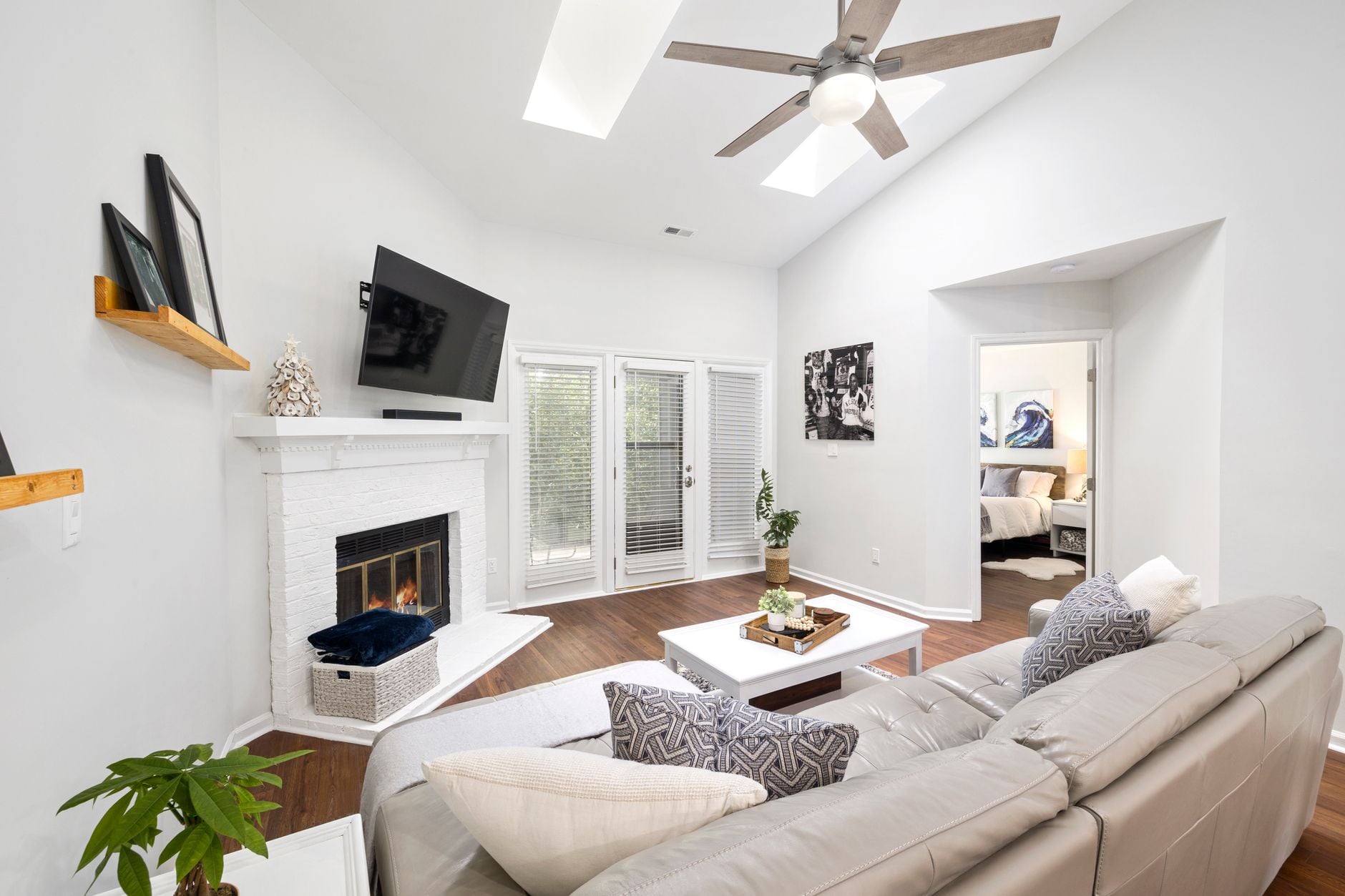

Treating Fireplace Season Like a Project With a Start Date
Most households treat fireplace season as something that arrives on its own the first genuinely cold evening, and the fireplace either works or it does not. A better approach treats fireplace season as a short project with its own start date, months before the first fire, so that every piece, firewood, sweep, repairs, safety checks, is handled on a schedule instead of scrambled together the week it turns cold. Here is what that calendar looks like for a household in Thousand Oaks, Camarillo, Oxnard, Ventura, or Santa Paula.
Early Summer: Order and Stack Firewood While There Is Time to Dry It
Firewood needs real time to season properly before it burns clean, and that clock starts the day it gets split and stacked, not the day you decide to light a fire. Ordering or splitting wood in early summer gives it the entire warm, dry stretch of the year to lose moisture before burn season, which means better draft, less smoke, and less creosote once you actually start burning. Wood picked up late in the year, right before you need it, simply has not had that time, no matter how good the source.
Store it off the ground, covered on top, and open on the sides so air can move through the stack. This is the easiest piece of fireplace prep to get right, and it is also the one most homeowners leave until far too late in the year.
Mid Summer: Book Your Sweep Before the Fall Rush
By the time everyone else in Ventura County starts calling for a chimney sweep, appointment calendars are already filling up. Booking mid-summer, while your fireplace is the last thing on anyone's mind, gets you a wider choice of appointment times and a technician who is not racing through a packed fall schedule. It also puts any repair recommendation on the calendar with plenty of lead time before you actually need the fireplace working.
Late Summer: Schedule Any Repairs the Sweep Turned Up
If your mid-summer sweep turned up a damaged damper seal, a cracked firebox panel, or a cap that needs replacing, late summer is the window to get that repair scheduled and finished. Materials, permits where needed, and appointment slots are all easier to line up before the fall rush hits, and finishing repairs before the season starts means you are not choosing between using a fireplace with a known issue and going without heat on a cold night.
Early Fall: Confirm Damper, Cap, and Detector Function
Before the season's first fire, walk through a short function check: open and close the damper fully to confirm it moves freely, look at the cap from ground level for anything obviously loose or damaged, and test smoke and carbon monoxide detectors near the fireplace. None of this requires a technician visit if your sweep and inspection are already current, but it takes a few minutes and catches anything that changed since your last professional visit.
The Week Before First Use: A Short Pre-Burn Checklist
In the final stretch before you plan to light the first fire of the season, clear the hearth area of anything flammable that has accumulated over the warmer months, confirm your firewood supply is dry and accessible, and have a fire extinguisher rated for the space nearby. This is a short check, not a project, but it belongs on the calendar the same way the bigger items do so it does not get skipped.
Mid-Season: When to Check In Again
Households that burn regularly through the cooler months, several nights a week rather than an occasional weekend fire, benefit from a mid-season check-in partway through the season. This is a good point to ask about creosote buildup if you are burning heavily, confirm the damper is still sealing properly, and make sure the firewood supply lined up in early summer is holding up to the pace you are actually burning at.
End of Season: Set Next Year Up Before You Forget
Once the season winds down, take a few minutes to note anything that came up: a damper that stuck once or twice, a draft issue on windy nights, firewood that ran out earlier than expected. Writing this down while it is fresh, rather than trying to remember it next summer, makes next year's prep calendar far more useful. This is also the point to start planning ahead for the following early-summer firewood order if this season's supply ran short.
Coastal vs. Inland Prep Timing
Coastal households in Oxnard, Ventura, and Camarillo deal with a longer stretch of damp, marine-layer conditions, which affects both firewood storage and cap maintenance differently than it does further inland. Keeping firewood covered and elevated matters more here, and a cap check ahead of the wetter months is worth prioritizing on the calendar.
Inland households in Thousand Oaks and Santa Paula see drier conditions and more debris carried by wind, which puts more emphasis on spark arrestor mesh condition and clearing brush or debris away from the chimney base before the driest stretch of the year sets in.
Multi-Fireplace Households: Staggering the Calendar
A household with more than one working fireplace, a main living room fireplace and a smaller den or bedroom unit, for instance, benefits from staggering rather than combining every step. Booking the sweep for both units on the same visit is efficient, but firewood needs, usage patterns, and repair timelines can differ between a fireplace that gets used most evenings and one that only comes on for guests. Noting each fireplace's actual habits separately at the end of the season, rather than treating the household as having a single fireplace calendar, keeps the following year's prep more accurate for both.
Renters and New Owners: Starting the Calendar Mid-Cycle
Not every household gets to start this calendar in early summer. If you move into a home in Ventura or Santa Paula partway through the year, or take over a rental with a fireplace you have never used, the right move is to start wherever you are rather than waiting for next summer to begin the cycle properly. Book a sweep and inspection as soon as reasonably possible after moving in to establish a baseline, then fold into the early-summer firewood and mid-summer sweep rhythm described above once the following year arrives.
Why a Calendar Beats a Memory
None of these steps are complicated on their own. What actually causes problems is trying to remember all of them the week you want a fire going, which is exactly when appointment calendars are tightest and there is no time left to fix anything a sweep or inspection turns up. Spreading the same tasks across a full season, starting with firewood in early summer and ending with a short pre-burn checklist in fall, turns fireplace season into something planned instead of scrambled.
Get Your Prep Calendar Started With Westbrook Chimney Experts
Our CSIA-certified technicians serve Thousand Oaks, Camarillo, Oxnard, Ventura, and Santa Paula, and we can help build a prep schedule around your household's actual burn habits, whether that is a handful of fires a year or a fireplace running most cool evenings. Call Westbrook Chimney Experts at (820) 345-0334 to get your sweep and inspection on the calendar early, while summer scheduling is still wide open.
A fireplace that gets prepped on a calendar works the first time you need it. One that gets prepped in a rush usually does not.
Need Professional Chimney Service?
Our CSIA-certified technicians are ready to help with all your chimney and fireplace needs. Contact Westbrook Chimney Experts today for expert service throughout the Ventura County service area.


